
Train to Facilitate
Skills and Capacities
As a certified facilitator for The Equus Effect, graduates will:
Develop the capacity and expertise to hold the space for a wide range of reactions and resistance from clients
Learn to recognize and manage triggers in themselves and in clients
Read non-verbal cues among participants and horses that reveal key opportunities for growth and development
Provide effective input and feedback through invitational questions
Offer tools that ground participants (and facilitators)
Cultivate interoceptive awareness
Facilitate a fluid yet structured four-session, 16-hour curriculum
Present engaging didactic material and discussion that provides effective tools for triggers and difficult emotions
Lead body-based practices to set the tone for experiential learning and expand emotional and mental capacity to handle real-life situations.
Use a structured Guide for Facilitators
Get expert coaching and support for program delivery and direction for starting a program among a wide range of populations
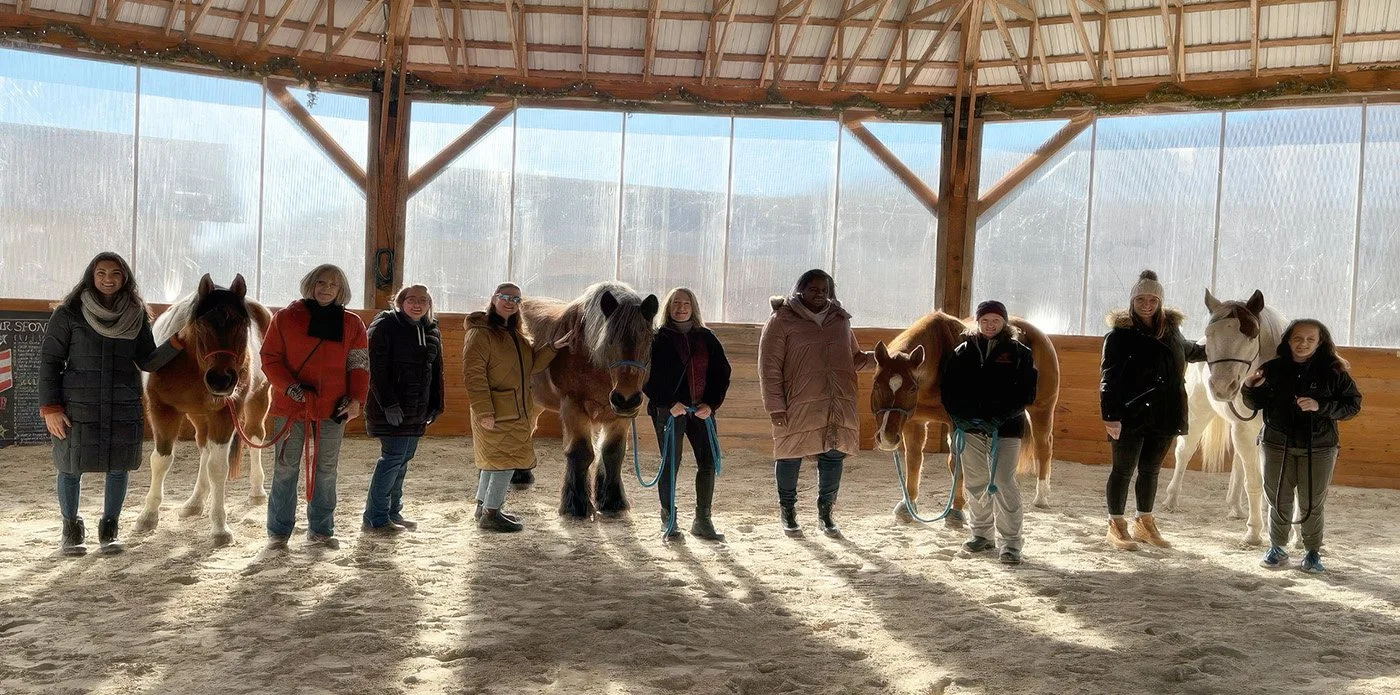
Approach
The Equus Effect Program is both unique and valuable in terms of its ability to deliver effective and long-lasting benefits to many populations because:
The content focuses on practical tools for resilience and relationship skills to deal with life situations.
The hands-on experiences, somatic practices, and cycles of activation and settling offer real-time, sensory-filled learning that requires full engagement.
The work leaves an indelible mark on perceptions, beliefs, and behaviors because it enables both clients and facilitators to recognize and change old patterns in real time.
We are most interested in helping both clients and facilitators to apply the principles, insights, and capacities gleaned from the TEE curriculum to personal and professional situations. The promise is to use these tools for continued growth and development.
We draw these real-world tools from the following:
Somatic Experiencing®
Eponaquest Worldwide
The Masterson Method
Polyvagal Theory
Heartmath
Karla McLaren, M.Ed
New Trails Learning
Professional Standards
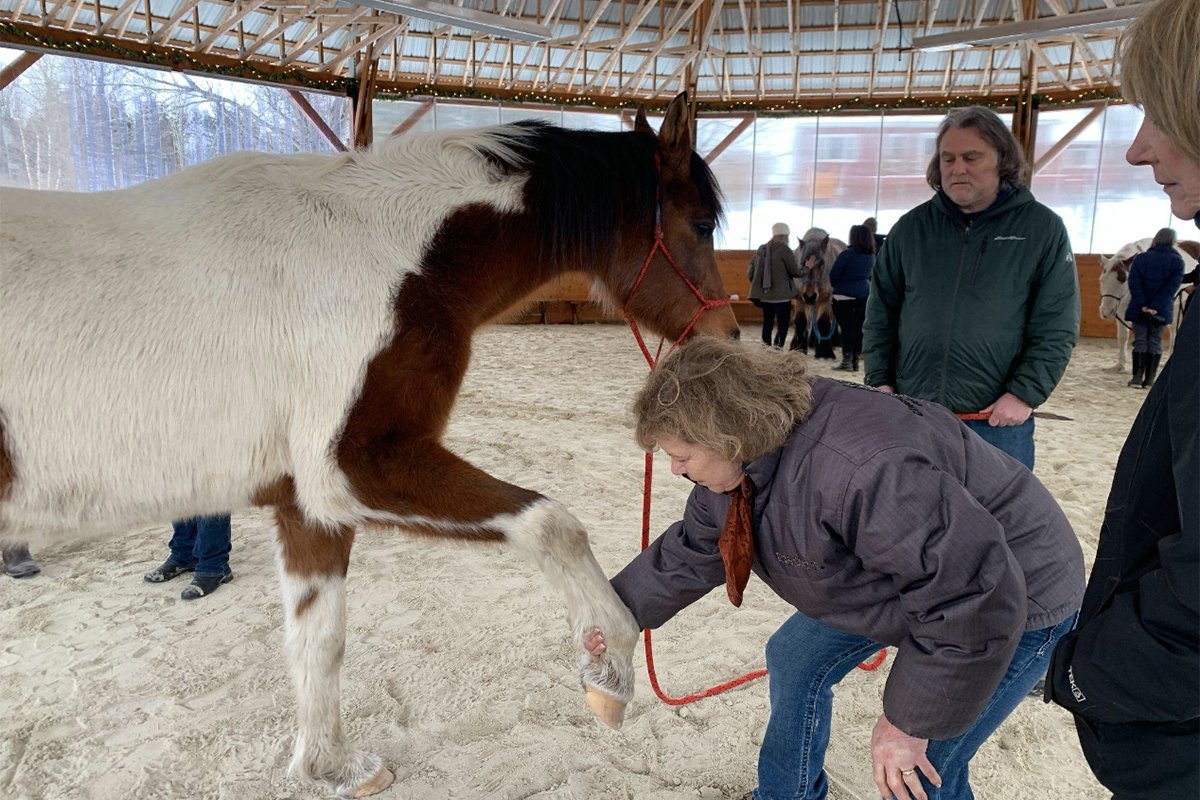
Our experienced facilitators teach concepts in this curriculum through direct knowing and hands-on learning.
Between experiential learning with horses, body-based tools and education in Emotional Agility® we offer students the opportunity to discover how to facilitate from a grounded place of emotional maturity and greater mental and emotional capacity.
Since TEE is a multi-component non-medical model, we do not operate from a treatment plan or diagnosis. Rather, we show training candidates how to focus on current barriers to presence and resistance among clients through embodied learning, in-hand horsemanship skills and group processing.
The model is a level playing field where certified senior facilitators act as guides and mentors who have also ‘walked the walk.’
“As from within, so without.”
Tools of the Trade
We are serious about the structure of our four-session curriculum, so the training curriculum also follows a four-module approach that focuses on Resonance, Connection, Collaboration, and Capacity.
Training Materials:
Facilitator’s Guide
Online Study Guide
Reading List
Videos
Pre-Training Requirements:
One-weekend workshops called Inside The Equus Effect
One online meeting to introduce The Enneagram, a robust temperament-based system that offers tools and practices for facilitator candidates to enhance their capacity to recognize and regain presence when triggered by situations and people in both personal and professional settings.